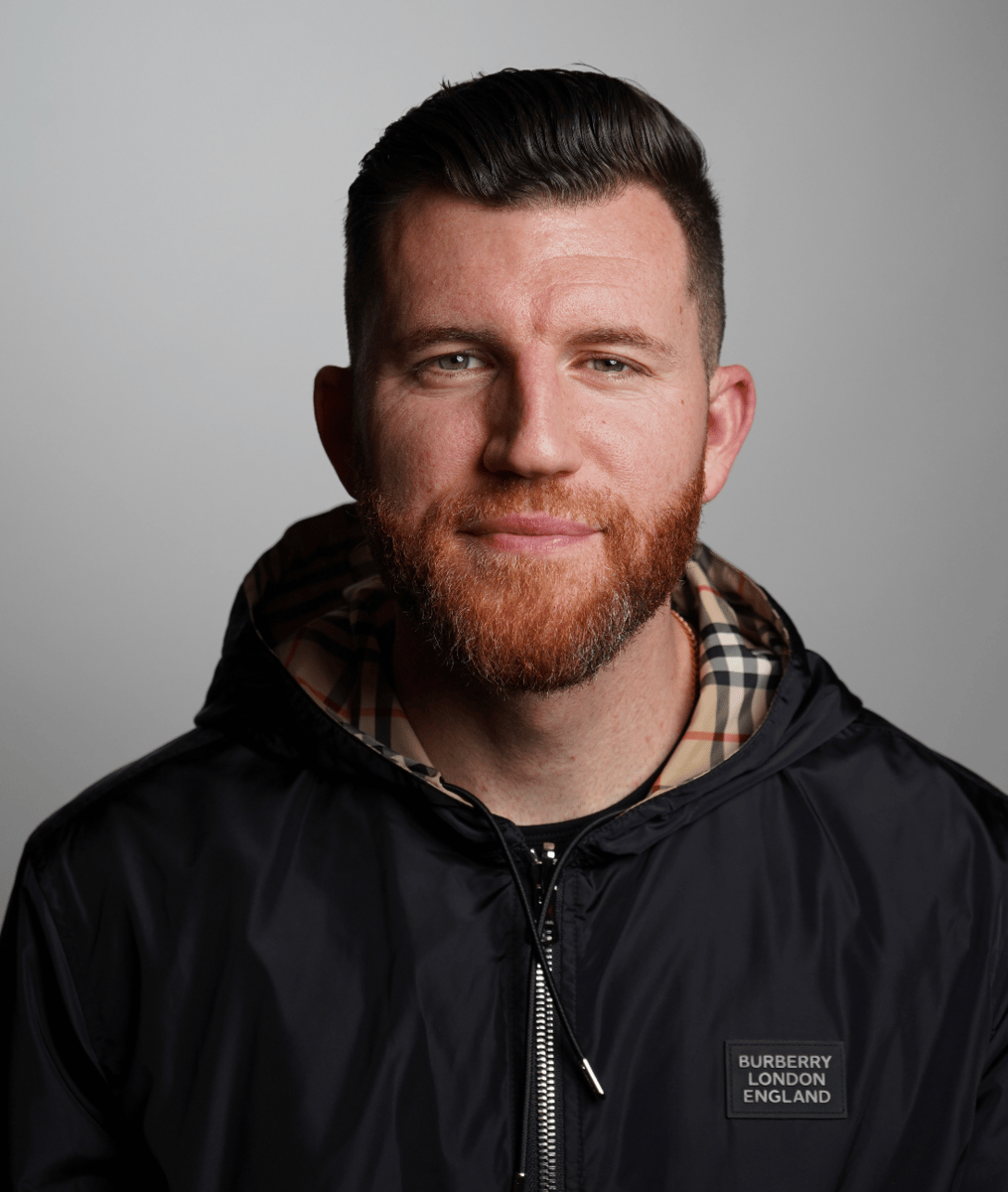
Yo! Welcome to the next episode of The Reeder where you get actionable tips and strategies for creating memorable content every Saturday.
First time reading? Subscribe here to get future sends.
A few weeks ago, LinkedIn invited me to their NYC headquarters
and I sat down with Ty Heath — Global Director of Thought Leadership, Go-To-Market at LinkedIn.
She’s also a co-founder of the B2B Institute and jury president of the Creative B2B Alliances at Cannes Lions this year (...no big deal).
Ty sees more B2B buying data than almost anyone on the planet. And what she told me changed how I think about content, credibility, and why some LinkedIn posts only get likes while others produce sweet, sweet qualified pipeline.
So today’s edition you’re getting:
the 3 things every buying committee needs to feel before they say yes — and what's killing 40% of B2B deals (it's not your biggest competitor)
the 20-minute habit that gets you posting original content consistently. If "I don't have time" is your reason, this one's aimed at you.
Side note: If you'd rather watch the whole conversation, it's here. Otherwise, scroll on with your bad self.
Ty opened with a stat that still bothers me.
40% of B2B buying decisions end in no decision.
Not a loss to your #1 competitor or the cheaper alternative. The group just never got comfortable or confident enough to say yes, so they did nothing at all.
Why you ask?
To start, the buying group used to be ~10 people on average. In 2026, it's climbing toward 22.
Ty put it in terms I can definitely relate to: She can't get a group of friends to agree on a dinner spot — some want Greek, some want Jamaican, everyone wants something different.
Now scale that to 22 people trying to agree on a multi-million-dollar purchase where somebody's job is on the line if they pick wrong.
Good friggin’ luck.
That's the problem her team is focused on solving. They call it viability: helping a buying group actually get to yes vs “let’s just keep things like they are”.
Wanna know how?
Buying groups need these three things to go from “maybe…” to “we want to move forward”
Ty broke viability into three elements:
Risk. Someone in that group is putting their reputation on the line to champion you.
Your job is to make choosing you feel safe. Are you giving your champion what they need to defend the decision to their boss?
Visibility. There's the buyer you're targeting, and then there's the hidden buyer.
Legal, finance, and procurement hold roughly half the decision-making power, but most of them have never heard of your brand. If they don't know you exist, Ty said, you're almost done before you start.Proof. We want to know that someone like us made this same call and it worked out.
One of the best ways to get me to move forward is to show that someone like me already has.
Miss one of the three and you risk getting added to the 40%.
LinkedIn plays a huge role here
Risk, visibility, and proof are best built before the first meeting ever happens.
None of this gets decided in the first sales meeting. And if it does, it’s a HUGE uphill battle for sellers to try to get someone to buy-in from a cold start. (He said from experience.)
So your champion either has seen you/your brand on their feed, or they haven’t. The difference is having something to forward or they're building the case from scratch.
Ty calls LinkedIn "the conversation before the conversation," and she means it literally. Before someone meets you, hires you, or buys from you, they go look at your profile to figure out who you are and what you stand for.
True story: She told me she checked out my LinkedIn profile before agreeing to sit down with me.
That's reputational surface area, and it's working for you or against you before you open your mouth.
The vast majority of execs I talked to know LinkedIn's a good bet, and they want to finally get going, but they tell me, I just don’t have the time.
Ty, over to you.
How to post when you don't have time
I asked Ty how she coaches execs who say they can't fit it into their busy schedule.
Her answer: the clock was never the problem. Twenty minutes is easy to find on a calendar.
What nobody can stomach is twenty minutes of staring at a blank page.
So Ty splits it up. She calls it the 10-5-5 framework. Every day spend…
10 minutes noticing. What did you learn today? What struck you? Ty compares it to the red car effect — once you're tuned in, you start spotting insights everywhere you go. Events, customer calls, hallway conversations.
5 minutes writing. Get it out of your head and onto the page. Don't over-polish it. Just write something down.
5 minutes in the comments. Reply to comments on your posts, scan and comment on other people’s posts. This helps you get more comfortable adding to the conversation (and in my experience, can increase your overall visibility).
The ten minutes of noticing is where your point of view comes from, which is the thing that makes you classifiable in the first place.
The five minutes of writing puts you in front of the hidden buyer who'll never take your call but can absolutely kill your deal.
The five minutes in the comments is proof, in public, that you know what you're talking about.
(Quick tip: I use Wispr Flow to talk out a first draft after a meeting or an event. Keeps my actual phrasing, pace, and tone, which is the whole point of being original, eh?)
Twenty minutes a day, and only five of them are writing. The upside is huge.
I've heard this from my own Executive LinkedIn Accelerator clients. I meet with execs biweekly for 30 minute sessions, and every single one has told me that the surprising value isn't the post itself. It's stopping the day to think critically.
What you're missing by staying quiet
Posting on LinkedIn’s not for everyone. I get it. I’m not here to peer pressure you.
But here's the reframe I haven't stopped thinking about.
Everybody asks: What I will get if I post?
Ty flips it: What are you missing by not posting?
Your name is mentioned when a buying committee starts making their short list.
Inbound that shows up already sold, instead of a competitive knife fight.
And the one you never see — the opportunity that went to somebody else because your profile was a cropped wedding photo from 2016 and nothing since.
I'm a blue-collar guy who got invited to LinkedIn's headquarters. I'm only in that room because I've been posting for years.
I'll tell you like I tell my clients:
LinkedIn opens the door of opportunity before you reach for the handle.
But it’s more than just content…
More people will see your LinkedIn profile than shake your hand this year
What will they find?
When Ty mentioned she looked me up before agreeing to meet, I was both anxious and relieved.
I’d clearly passed the test, but was it really my best first impression?
Probably not. Which brings us to next week’s topic. I’m going to break down and rebuild my entire LinkedIn profile so I can attract and convert the right people — all while reflecting my personality.
Because pumping out content but ignoring your profile is basically investing in bad first impressions at scale.
So next Saturday we're back in the rebuild.
Until then, run 10-5-5 and see how it goes. Hit reply and tell me what you noticed — I read every one.
Holler at you next Saturday,
Devin
If you like today’s post, you can help me grow by forwarding it to one person with a quick “You’ll love this newsletter. Totally worth signing up.”
Pen by Devin Reed
Founder, The Reeder
The #1 content mistake in 2026
I see this all the time and it kills great ideas.
Here’s what to stop doing if you want your audience to feel something.
Watch and subscribe on YouTube.
Here’s how we can team up


Tools I use to run and grow my business
Beehiiv: The newsletter platform I trust to build and grow my newsletter. Get a 14-day trial + 20% OFF for 3 months.
SuperHuman: I’ve been a customer for 2+ years and recommend it to everyone who’s looking to increase productivity and enjoy email again. Plus your first month is free.
Stanley: The only LinkedIn AI writing tool I trust to write my LI content (and that gets my voice right). Get a free three-day trial.
Testimonial: How I easily collect and share customer reviews. Get 15% off year 1.
Wispr Flow: My favorite voice-to-text tool that helps me capture my first draft. Try it for free.
Note: These are affiliate links, but I would recommend them without the commission.